A practical smart-apparel company, built from the garment up.
WearQuick is developing performance clothing with practical sensor placement, removable electronics, and a clean mobile experience. The bet is simple: people will wear better body-data products when they still feel like clothing.
Prototype-stage wellness and performance technology. Not a medical device. Not for diagnosis, treatment, prevention, emergency alerts, or clinical monitoring. Not an offer of securities.
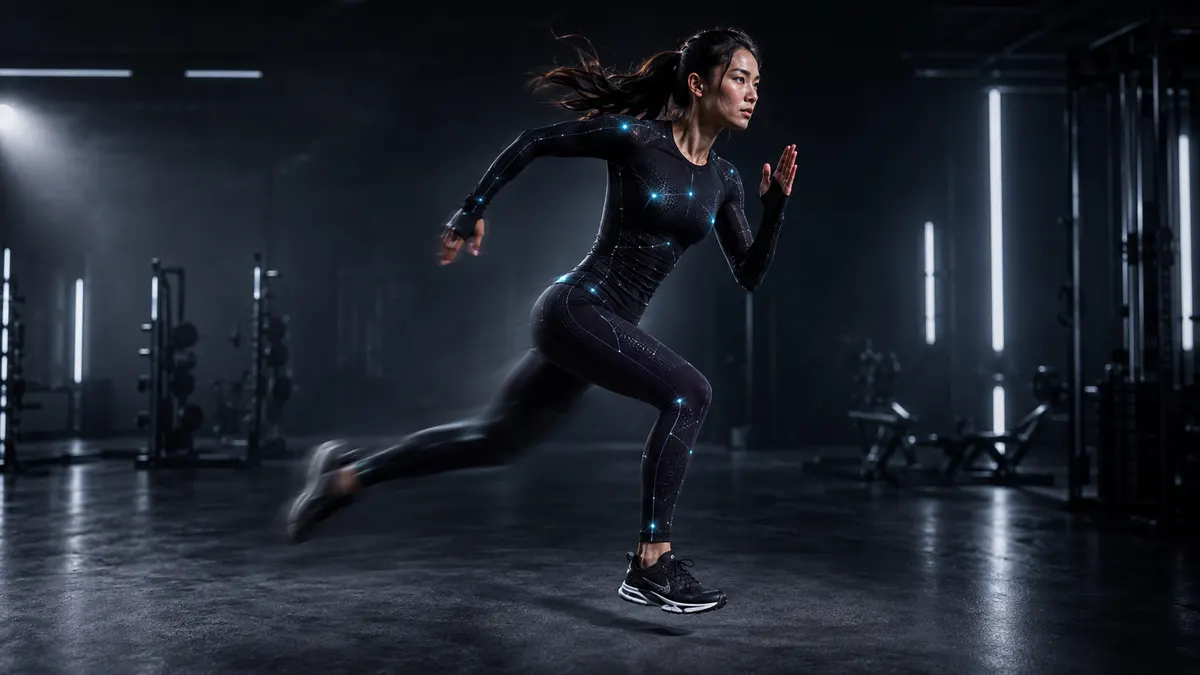
Fitness data is still trapped in devices, not clothing.
Today’s active consumer has watches, rings, bands, chest straps, and apps — but the clothing they actually train in is mostly passive. Existing smart-garment systems prove the technology is possible, but most are expensive, specialized, clinical-looking, or built for narrow professional use.
Bulky hardware friction
Straps, pods, and external devices add steps to every workout. Most active users abandon multi-device setups within weeks.
High price barrier
Advanced smart-garment systems cost hundreds to thousands of dollars, gating the category to research labs and elite teams.
Style gap
Most smart garments look more clinical than desirable. Athletes want clothing first, technology second.
Fragmented data
Users want simple mobile insight — exertion, recovery, training patterns — not a raw technical dashboard built for a sports lab.
Washability & durability
Electronics and clothing have to coexist practically. Many existing systems sacrifice everyday wearability for sensor density.
Smart clothing is no longer science fiction.
The wearable market is moving past watches and bands. The next frontier is clothing itself — garments that help users understand movement, exertion, recovery signals, and training patterns in a more natural form factor.
Third-party market research projects the category to grow more than 6x over the next decade. WearQuick is not trying to invent demand from zero; it is aiming for the consumer-friendly opening between sports lab systems and wrist-worn trackers.
Figure synthesized from public industry research; exact methodology and bottom-up SOM model will be in the offering memorandum at round open.
Existing products prove demand. And leave a design gap.
Advanced smart-garment systems already exist — but most are built for research, elite training, or specialized clinical use. They validate that the technology works. They also validate where the consumer-friendly opening is.
Hexoskin
Smart device $650 · Pro kit $899Garment-based ECG, respiration, activity sensing with BLE, app, dashboard, and data export. Established research-grade smart-garment platform.
Myontec Mbody3
€939EMG-focused kit with muscle-load and inertial sensing for athletes, training centers, clinics, and teams.
Sensoria
Premium textile systemRemovable-core sensor module, textile-integrated sensors, Bluetooth Smart connectivity, and a 9-axis IMU.
Companies like Hexoskin, Myontec, and Sensoria show that smart garments, textile sensors, removable electronics, and app-connected body data are viable. The category still leaves room for a more design-forward, activewear-native, consumer-accessible platform. WearQuick is being built into that gap.
A smarter layer for movement, training, and recovery.
A garment-first platform with a removable Bluetooth sensor pathway and a mobile app dashboard. Sensor pathways for heart rate, SpO₂, temperature, and movement, with EMG and advanced smart-textile testing on the Phase 2 roadmap.
Clothing-first design
Built to look and feel like activewear before anything else. The technology is invisible to the wearer; the garment is the product.
Removable sensor architecture
A practical path to charging, washing, hardware iteration, and future upgrades. The sensor pod evolves; the wardrobe stays.
App-connected experience
Live connection status, session summaries, basic trends, and clear performance indicators — not a clinical dashboard.
Scalable roadmap
Start with practical OEM/prototype validation, then advance toward textile electrodes, EMG testing, and specialty material integration.
Wording matters: WearQuick describes sensor pathways, not clinical metrics; a prototype testing platform, not a finished proprietary smart textile; and wellness and performance insight, not medical monitoring.
Where WearQuick stands today.
Real proof points, not aspirational ones. We are early — and we are further along than the average pre-seed deck claims to be.
Issued via the Canadian Start-Up Visa pathway by Manitoba Technology Accelerator — a recognized SUV designated organization.
WearQuick is a Canadian-incorporated smart-athleisure company headquartered in Toronto, ON.
Performance OS app demo built and reviewable — covering pairing, live signals, session summary, and recovery cues.
V1 garment + removable Bluetooth sensor pod architecture defined; supplier and OEM pathway under active evaluation.
Initial focus: heart rate, SpO₂, temperature, motion. EMG positioned as advanced testing path in V2.
Smart-apparel sales paired with an app/software subscription pathway — hardware as a recurring-software surface.
A patient build, publicly tracked.
One prototype generation at a time. Each phase has a single job: validate the next layer before committing capital to the layer after that.
Prototype V1 — Practical Validation
Branded athletic shirt or compression garment paired with a removable Bluetooth sensor pod and the WearQuick app dashboard. Goal: validate garment-based placement, live data capture, app experience, and user comfort.
Prototype V1B — Signal Quality
Improved sensor placement, garment pocket / snap system, structured testing protocol, session-data review, and early user feedback. Goal: validate signal quality and everyday wearability under real workouts.
Prototype V2 — Smart Textile Integration
Textile electrodes, EMG experiments, specialty fabric roadmap (graphene-enhanced and infrared-responsive textiles), improved washability and comfort. Goal: prove the next generation of integrated sensing.
Future Vision
A full WearQuick smart-athleisure platform — performance apparel, wearable intelligence, and personalized software for the everyday athlete.
Apparel sales plus recurring software.
A connected garment is a long-term software relationship. WearQuick is designed so that hardware revenue funds the platform and software revenue compounds the LTV.
Smart-apparel sales
PRO SUIT line + recovery garments sold direct-to-consumer. Hardware revenue funds the platform and seeds the recurring software relationship.
Subscription software
Performance OS membership delivers adaptive coaching, deep per-muscle analysis, and unlimited cloud history. Recurring revenue layered on every garment sold.
Compounding LTV
Each garment becomes a long-term software relationship. Per-muscle and bilateral data accumulates into a proprietary signal-training dataset.
Where the round goes.
Indicative allocation. Final breakdown will be in the offering memorandum at round open. We are deliberately biased toward engineering and Canadian team build-out — not marketing.
What is hard. And what we are doing about it.
Every venture has friction. We would rather list ours than let a backer find them in week three. Each item below is something we are actively engineering against.
Sensor durability under repeated wash cycles
A known smart-textile bottleneck. Our removable-pod-then-encapsulated-seam progression is designed to handle this — durability is being validated through prototype testing.
Textile-sensor supplier qualification
Bespoke conductive-yarn requirements take longer to qualify than typical apparel manufacturing. We are deliberately patient — getting it wrong upstream is far more expensive to fix downstream.
Wellness vs. medical positioning
WearQuick is intentionally scoped as a wellness and performance product. Lower regulatory drag, more constrained claim language. A medical-adjacent line could be a separate future track if data supports it.
Smart-apparel category education
Most consumers haven't worn integrated biometric clothing. First-mover positioning is a real advantage but also requires marketing investment to teach the category.
Competition from established wearables
Whoop, Oura, Apple Watch, Garmin are real and well-funded — but wrist/finger-worn. Integrated apparel is a different form factor, and our differentiation lives in per-muscle and bilateral data, not single-point heart rate.
WearQuick is not trying to prove smart clothing can exist. The market has already done that. WearQuick is building the version people may actually want to wear every day.
Get on the investor list.
When the round opens, the interest list goes first. Drop us a line — we’ll send the offering materials, jurisdictional eligibility, and timing as soon as they are available.
Email investors@wearquick.caOr reach the founding team directly through the contact page.